
AWDB speaks to Filipino-British artist Pio Abad following his Turner Prize 2024 nomination. His work centres on colonial histories and resulting cultural losses, particularly informed by his upbringing in the Philippines under Ferdinand Marcos. His art challenges the way museums collect, display, and interpret objects, retelling often overlooked and marginalised histories. Pio works across various mediums, including sculpture, drawing, and engraving, including works in collaboration with his wife, Frances Wadsworth Jones, with whom he has created multiple series reconstructing jewellery that has been obscured/lost through political conflict. In his recent solo exhibition at the Ashmolean Museum, Oxford titled ‘To Those Sitting in Darkness’, Pio displayed artefacts from historical-colonial collections informing the narrative of his work and serving as a reminder of the hold Western institutions still have on global cultural objects.
The title of the show is a reference to Mark Twain’s satirical essay, ‘To the Person Sitting in Darkness’, a critique of imperialism. Pio reimagines the Ashmolean exhibition now presented as part of the Tate Britain Turner Prize 2024 show. He is the first Southeast Asian artist to receive this prestigious nomination.
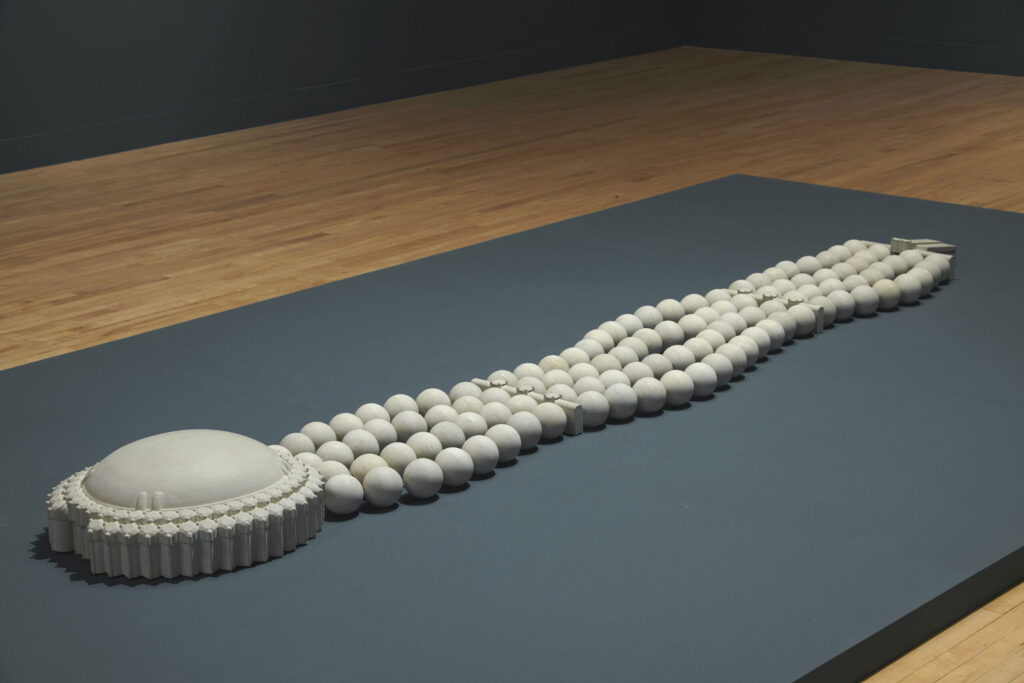
The exhibition opens with this huge reconstruction of Imelda Marcos’s pearl bracelet in concrete, ‘Kiss the Hand You Cannot Bite’. Could you talk us through its construction, and your decisions for its scale and material which differs from your other jewellery recreations?
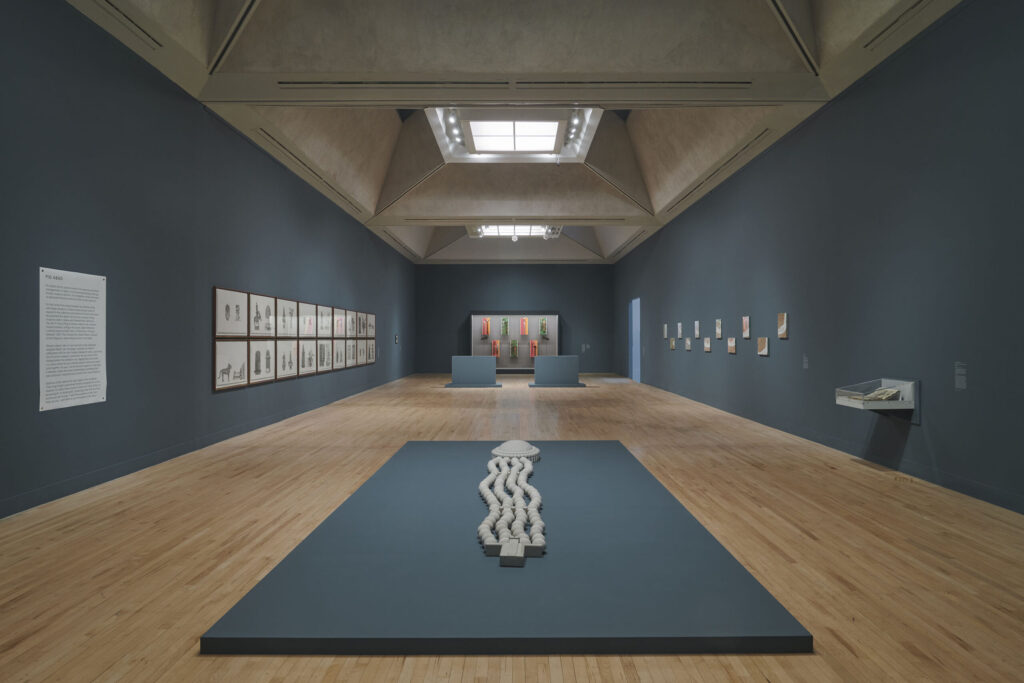
‘Kiss the Hand You Cannot Bite’ is actually the earliest work in the exhibition. Frances and I originally produced and exhibited it during my residency at Kadist in San Francisco in 2019. When I was reimagining the Ashmolean Museum exhibition for the Turner Prize, it felt important to include this work, which was not part of the original presentation at Oxford. I have spoken many times about the experience of walking through the abandoned presidential palace after the fall of the Marcos regime as my first experience of walking through a museum and it was important to assert that history in this exhibition. The museum as the site of loss and of theft. The work reimagines one of Imelda Marcos’ ruby, pearl and diamond bracelets as a concrete effigy. The bracelet as a monumental body lying in state becomes an apt metaphor for how this history has crystallised in my head. It also speaks of the particular moment that the sculpture was made, when personal and national grief became one thing. In using concrete, Frances and I wanted to transform the spectres of the Marcos’s history and the grief that accompanies it into something incontrovertibly present.
Your work spans a lot of mediums and covers a lot of ground. In your Turner prize exhibition is there a certain narrative you tell across your pieces, bringing together different histories?
I envisioned the exhibition as an archipelago of stories, and in my work all these narratives weave into one another to form a large tapestry of loss, of colonial and personal grief, and of beautiful things being vessels of painful histories. As much as the exhibition spans a wide history, from the Marcoses to the ongoing conflict in Mindanao, via the Romanovs and the ransacking of the Kingdom Benin, what brings all of these stories together is my own personal narrative. As much as the exhibition is in the guise of the museum, my approach to it was akin to writing a memoir, but one refracted through other histories and through other objects.
It’s hard not to imagine the masses of unseen artwork you come across when researching for your projects. How did you choose what to display / reference for this exhibition?
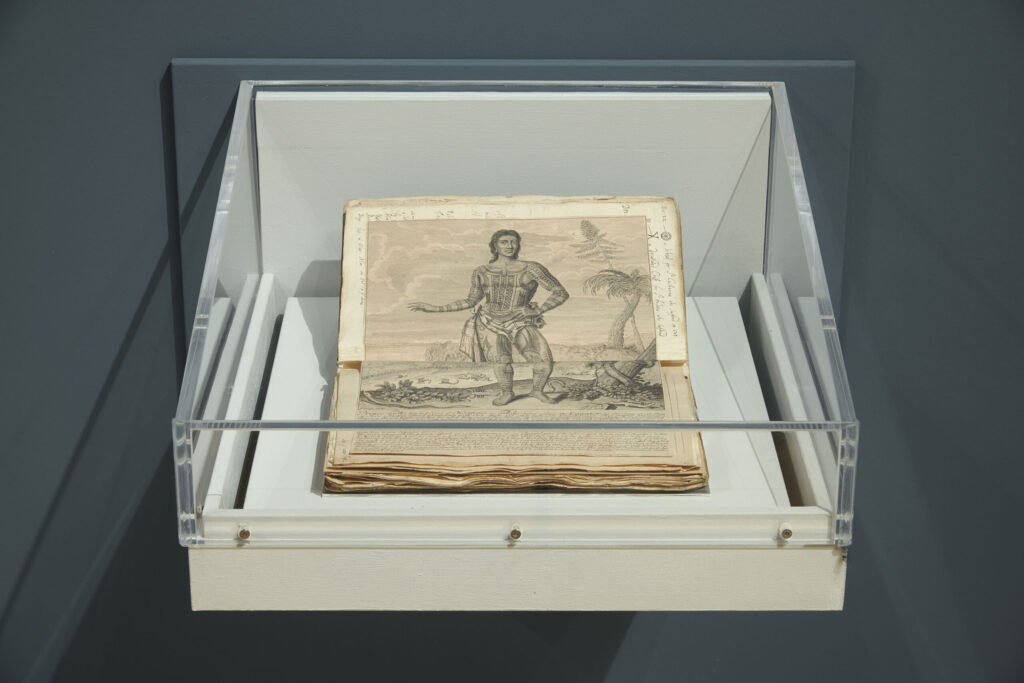
The actual process of displaying and making evolved into a choreography of call and response. The starting point of the entire process was the discovery of the 1692 etching by John Savage, depicting the Painted Prince, a young man from the Southern Philippines named Giolo, who was tattooed from the neck all the way down to his legs. Giolo was enslaved by a British pirate and subsequently brought to the UK as a curiosity and the etching was an advertisement to view him in London. From that, I thought it would be poignant for Giolo to encounter the Filipino American artist Carlos Villa, particularly a self-portrait he made with his face covered in tattoos that referenced Pacific islander cultures. Both represent tattooing, the act of inscribing the body, but tell divergent but interrelated narratives. For Giolo, his tattoos became a form of incarceration, he was exhibited as a curiosity and after he died his skin continued to be shown at the College of Anatomy in Oxford. Whereas for Carlos Villa, who after being told that Philippine art history didn’t exist, proceeded to create his own history in conversation with other colonised cultures, tattooing was an act of solidarity with other indigenous communities.
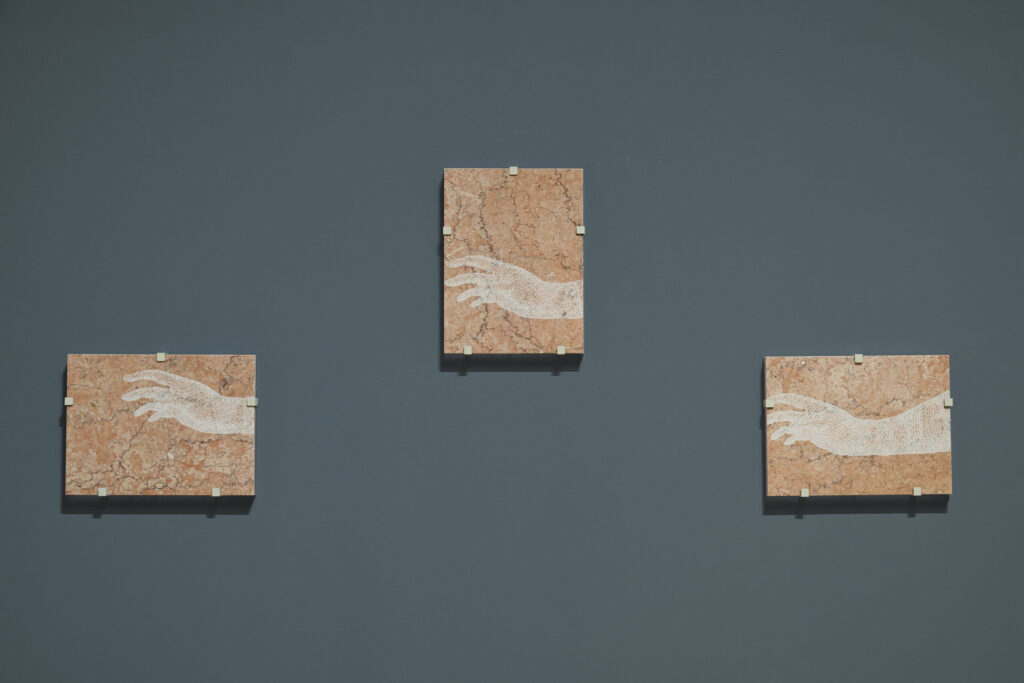
My own contribution to this encounter, entitled ‘Giolo’s Lament’, comes from the realisation that the etching of Giolo is one of the earliest representations of a trafficked Filipino body. ‘Giolo’s Lament’ traverses his tattooed hand through eleven engravings on marble arranged on the gallery walls like a musical score. A spectral limb grasping for something out of reach or fading away, depending on how you approach the work. By engraving Giolo’s hand onto pink marble, the material of historical permanence, but in the hue of human flesh, I wanted to rescue Giolo from the archives, monumentalising the forgotten prince into permanence, but also reminding us of his fragile humanity.
This process of staging transhistorical encounters that speak of common histories continues throughout the exhibition.
How have you found your artistic exploration of Filipino culture and history whilst living in the UK?
Having spent nearly two decades in the UK now, I think that distance has provided a sense of perspective, allowing me to see the contours of Filipino culture and history and also see it refracted through other histories of conquest and dispossession. My work will always emanate from Filipino narratives, but I have become less interested in telling the story of nation and more invested in making that history kaleidoscopic.
Accompanying your artworks are captions that you have personally written exploring their histories. What was behind this decision, and why was it imperative that you took up this role?
In the process of realising this project at the Ashmolean, and subsequently at Tate Britain, I found myself creating my own museum as a memoir. By staging encounters and making artworks in response to histories that I have uncovered, I wanted to serve as a conduit for the stories of these objects to continue and it was important that my own voice was present in the exhibition. I see it as an act of generosity, of giving the viewer as much access to my own thinking as possible and, in the process, hoping that they will find something in the histories told and displayed that reflect their own experiences.
How do you hope the rediscovery experienced in your exhibition informs our present?
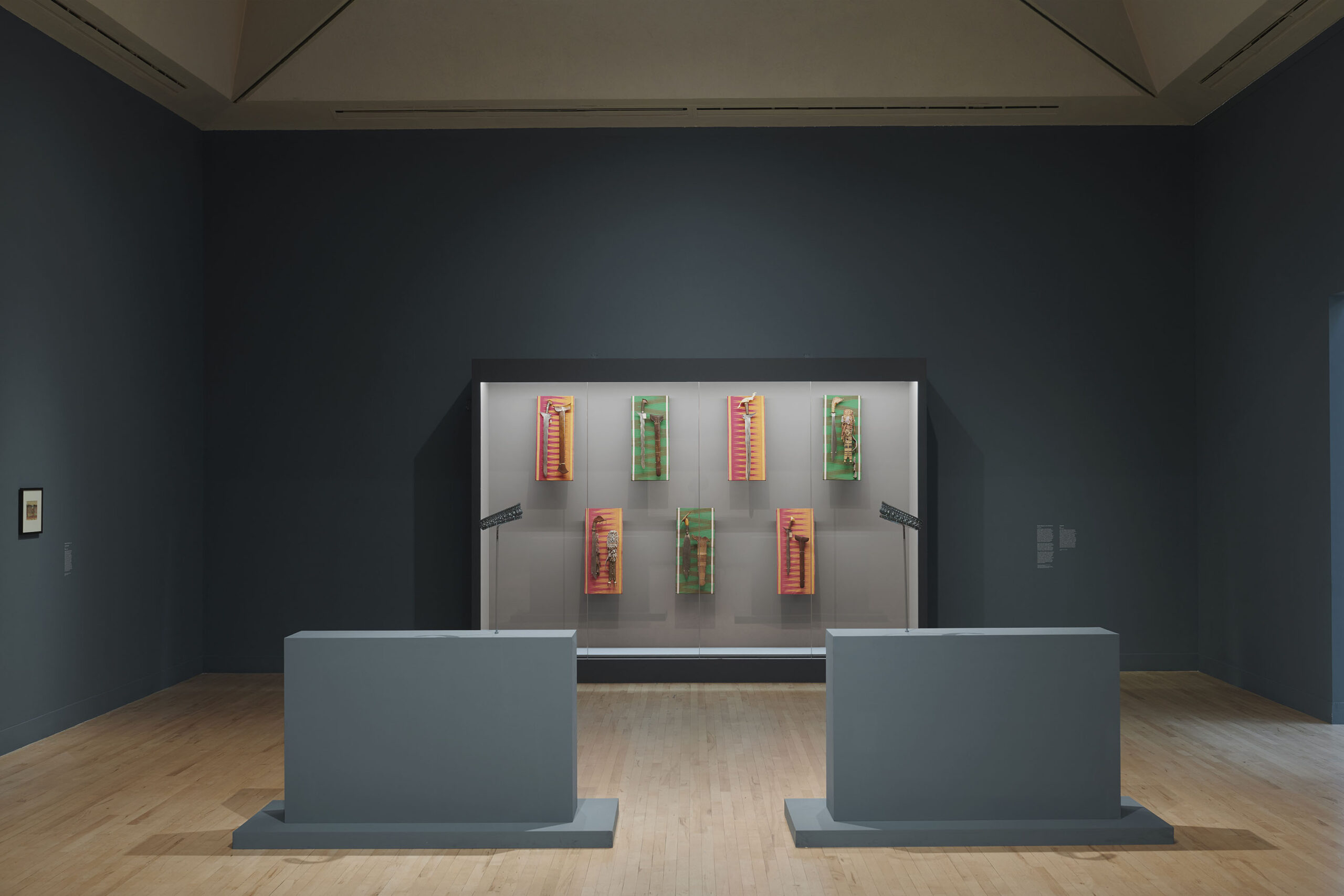
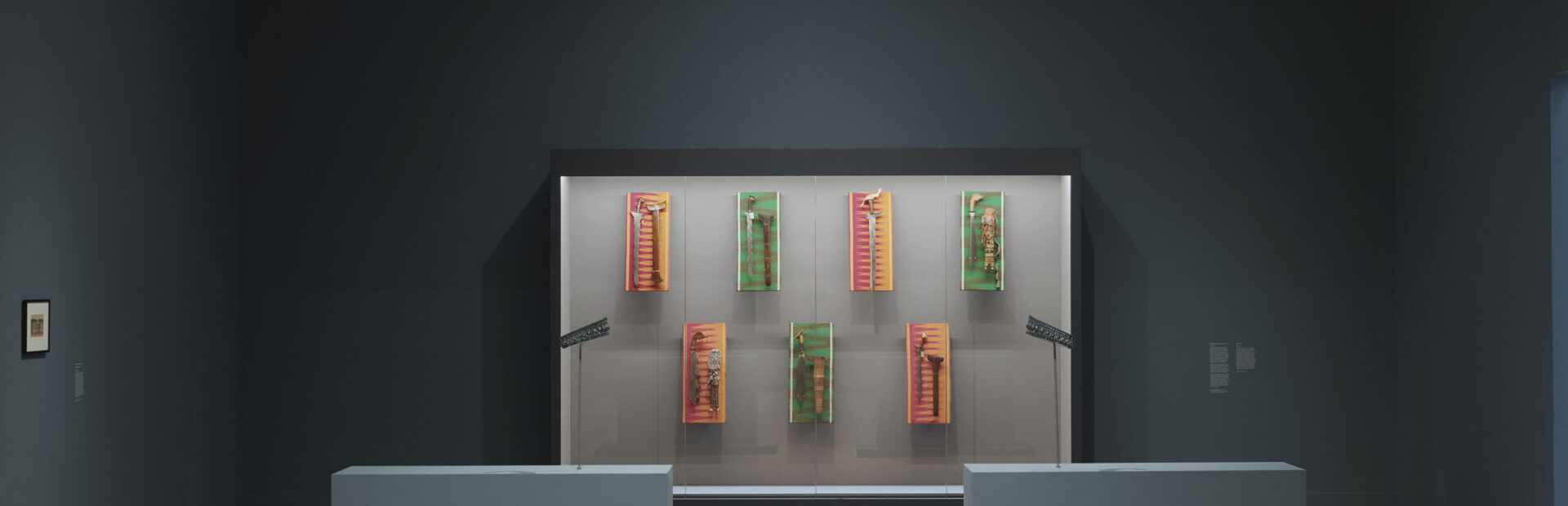
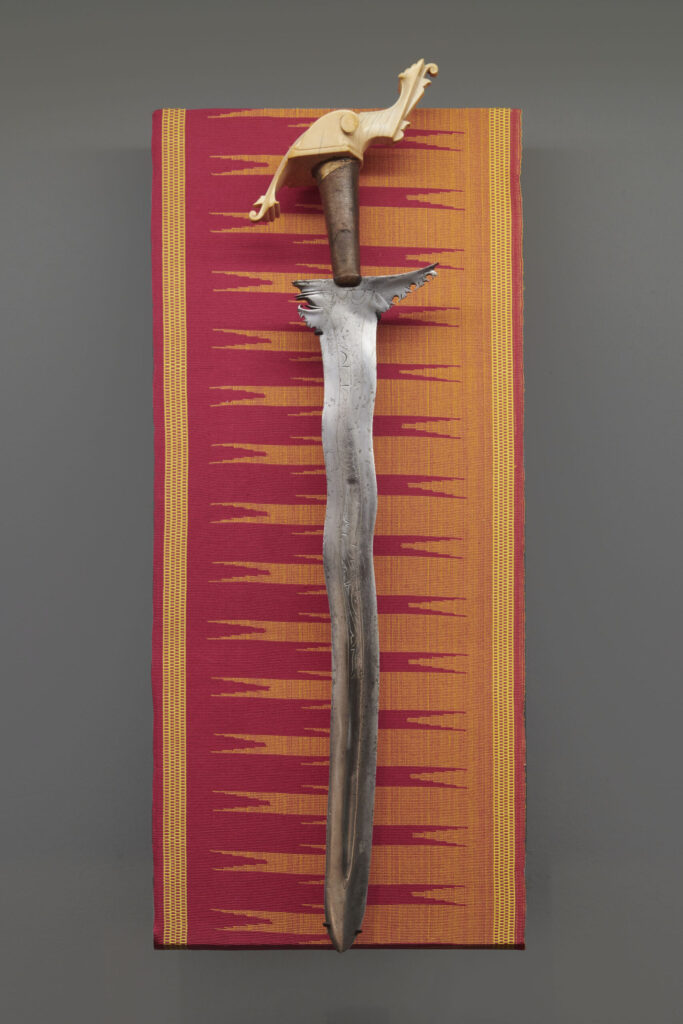
An important interlocutor throughout this project is the Filipino curator Marian Pastor Roces. In 1998, she put together an inventory of Filipino artefacts exiled in museums outside the country. She discovered that 90 percent of Filipino material heritage exists in the backrooms of Western museums. The most recurrent artefact is the bladed weapon from Mindanao, where indigenous tribes adapted Islam. These weapons were made for an individual warrior’s hand and bestowed a spiritual potency upon their owners. Most of them were taken during the Philippine-American War in the 20th century, when US colonisers waged asymmetric battles against the Moros, the local Muslim population. These weapons have been largely kept in museum storage, falling into the cracks of taxonomy as the Philippines is considered a largely Catholic country.
In the exhibition, I borrowed bladed weapons from the British Museum and the Pitt Rivers Museum that have never been exhibited since accession and displayed them against contemporary fabrics from Mindanao made by a collective named Sinagtala, a group of weavers who came together during the bombing of the city of Marawi in 2017. Outside the Philippines, little is known about the siege of Marawi in 2017, when the national government under then-President Rodrigo Duterte, aided by the US military, rained bombs on the northwestern Mindanao city of Marawi, in a quest to capture a militant group affiliated with Islamic State. The conflict levelled the entire city and devastated hundreds of thousands of lives. The women of Sinagtala wove as the bombs fell. The jagged motifs on the traditional fabric represent the tremors that reverberated around the weavers.
The bladed weapons touching the woven fabric speak to accounts of violence and dispossession that has continued unabated since the 16th century. The exhibition is a reminder that the past is never past. In fact, the past always has the habit of rushing into the present.
What does this nomination mean to you personally and professionally?
When I moved to the UK in 2004, one of the first exhibitions I saw was the Turner Prize – Jeremy Deller won that year and Yinka Shonibare was one of the nominees. I remember thinking that the Turner Prize was the pinnacle of artistic recognition. The twenty-one-year-old me would have been absolutely blown away to be part of that history. The forty-one-year-old me is absolutely blown away to be part of that history.
Pio’s work is currently on display as part of the Turner Prize 2024 exhibition at Tate Britain, London, and will end on 16 February 2025. For more information, please click here.
INTERVIEW COURTESY OF ART WORLD DATABASE AND PIO ABAD, NOVEMBER 2024.